PSE Healthy Energy sent Executive Director Seth Shonkoff, PhD, MPH, to COP30 in Belém, Brazil, to share PSE’s research on gas composition and the air-quality and health impacts of methane emissions. After presenting new findings, fielding questions about PSE’s Methane Risk Map, and meeting dozens of experts working to cut methane worldwide, here are Seth’s top five takeaways:
- Momentum is growing—but time is running out. New funding, partnerships, and policies signal that methane is finally being treated as the climate emergency brake it is. Bloomberg Philanthropies pledged $100 million to reduce oil and gas methane leaks. The Global Methane Hub committed $30 million for low-emissions rice farming and $10 million to help Latin American and Caribbean cities cut food-waste methane. The Climate and Clean Air Coalition launched a new accelerator to drive rapid methane and HFC reductions across 30 developing countries. Chile and California signed an MOU to share best methane reduction practices. Yet the world remains off-track to meet the 160-country pledge to cut methane 30% by 2030—and global methane emissions continue to rise.
- Climate and health are inseparable. A pre-COP memo from Bill Gates suggested climate impacts may be less severe than scientists project and argued for prioritizing global health over climate action. The memo, unsupported by scientific evidence, presented a false choice. PSE’s research shows the same emissions that warm the planet also harm health. Our work shows that methane super-emitters often release enough benzene to pose acute health risks to nearby communities. Building an energy system that protects health inherently protects the climate.
- Technology and data alone won’t fix the problem. Satellites, advanced monitoring, and PSE’s gas-composition and modeling research have revolutionized methane detection and illuminated the air quality impacts and health risks posed by methane emissions. But better data doesn’t automatically lead to cleaner air. Translating science into action requires getting this information to regulators, decision-makers, and community leaders who can turn evidence into policy and pressure.
- Different methane sources carry different health risks. Methane is a solvent—which means it can dissolve and entrain other chemicals into gas mixtures, which are then released alongside the methane when it escapes. PSE’s research shows benzene is ubiquitous in natural gas and is released throughout the oil and gas supply chain. But methane from other sources, such as landfills, may contain different pollutants and pose different risks. Understanding the full spectrum of methane emissions is an urgent area for further research.
- Frontline workers are essential to methane reduction. COP30 marked the first time waste-pickers were hired to compost and manage the conference’s food waste—an innovation by the Brazilian presidency that spotlighted the critical role frontline workers must play in climate solutions. Whether waste-pickers managing landfills in the informal economy, or oil and gas workers maintaining storage tanks and pipelines, these individuals are vital to identifying and reducing methane leaks. They are also among the most vulnerable to the health risks from emissions.
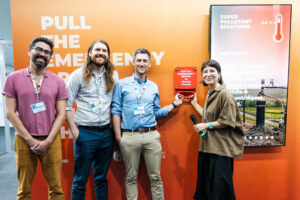
From left to right: Global Methane Hub’s Henrique Bezerra, Carbon Mapper’s Dan Cusworth, PSE Healthy Energy’s Seth Shonkoff, and DeSmog’s Clare Carlile pull the emergency brake on climate change after their COP30 panel on methane and public health. Photo courtesy of The Global Methane Hub.