We are still energized from our time at New York Climate Week! For the past few years, PSE has invested in sending our staff to this crucial event to build broader, deeper relationships with our partners, funders, and community organizations, and we’ve seen our presence in these conversations grow.
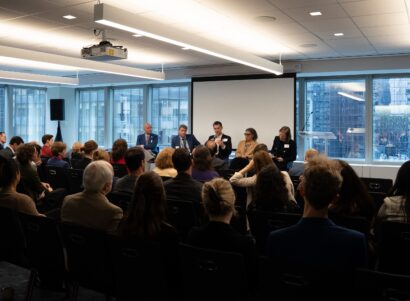
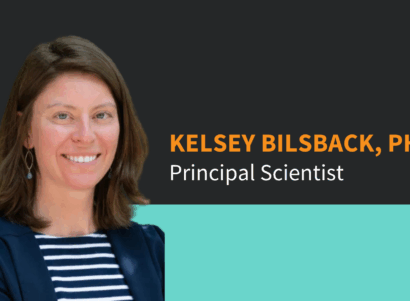
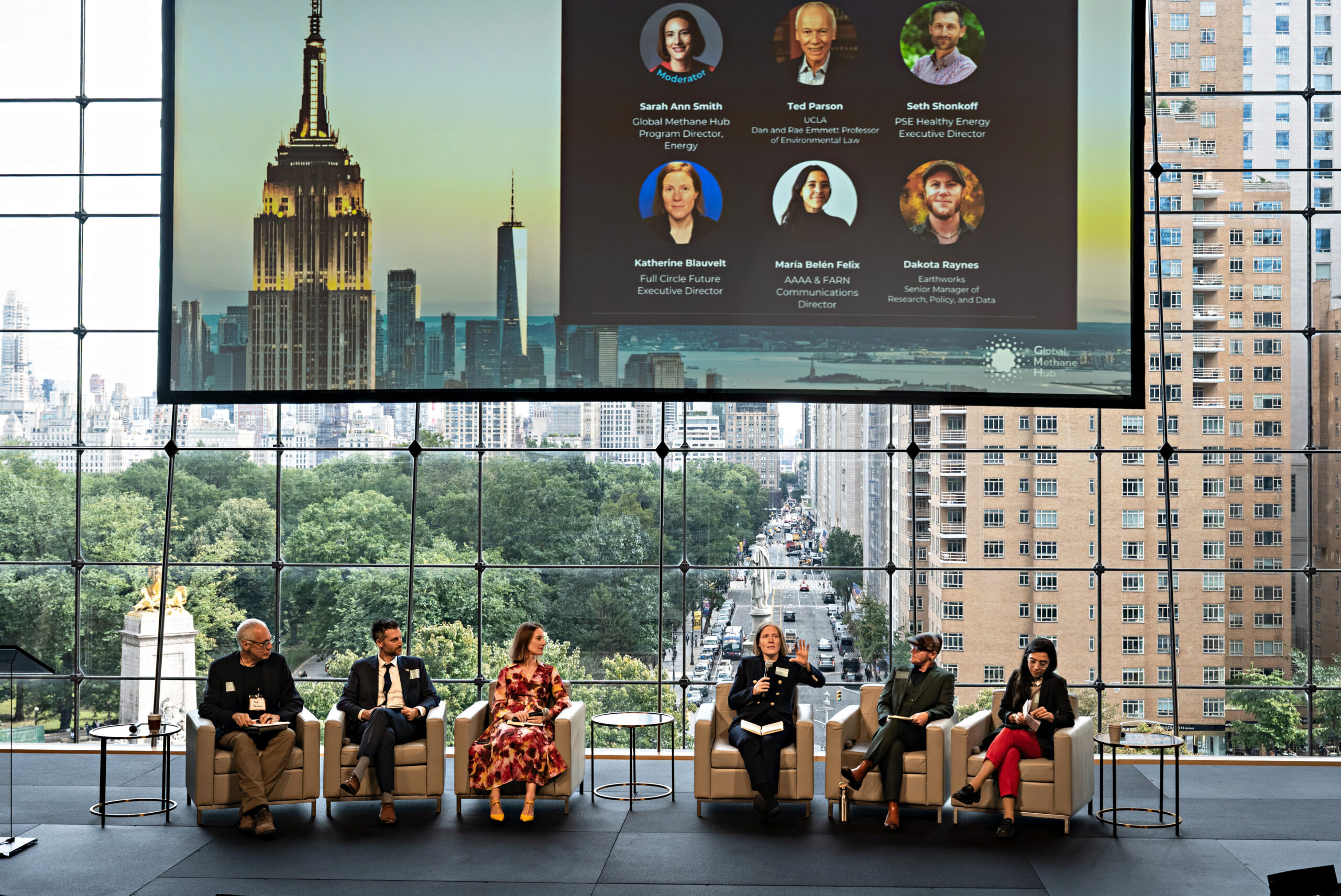
Throughout the week, our Executive Director Seth Shonkoff, Methane + Health Initiative Lead and Principal Scientist Kelsey Bilsback, Senior Scientists Yunus Kinkhabwala and Sebastian Rowland, and the Director of Communications Edith Stone attended events, spoke on panels, and joined closed-door conversations. We joined conversations hosted by Global Methane Hub, Climate Rights International, and Spark Climate Solutions, and our work was even shown at a Gas Leaks Art Gallery event. As the Global Methane Pledge’s 2030 deadline approaches and energy prices worsen the affordability crisis, many conversations
focused on how to bring the science of health and affordability into today’s decisions.
We took away three major lessons from our week in New York:
- Make the science human. The strongest conversations connected data to people, health, affordability, and quality of life to influence real action.
- Be present where the conversations are already happening. Climate Week reinforced the importance of deepening our relationships with partners who share our mission.
- Make sure the messages reach the audiences. Rigorous science is the foundation, but impact depends on how well we translate it for policymakers, communities, journalists, funders, and other stakeholders.
What does this mean for how PSE works? We will continue to connect research and tools to the decisions they inform in areas including methane policy, air quality and public health regulation, and advocacy. We will continue to bring in communities and partners to make sure the research has real-world relevance as projects develop.
For our scientists, the highlight of the week wasn’t a single event, but the chance to connect with colleagues and people outside the field. Telling the story of our work and listening to others’ stories to keep it grounded in real-world issues is a skill we’ll keep building as we head toward 2027.
Explore the Methane Risk Map to see the data behind these conversations and stay tuned for new publications, data tools, and initiatives!
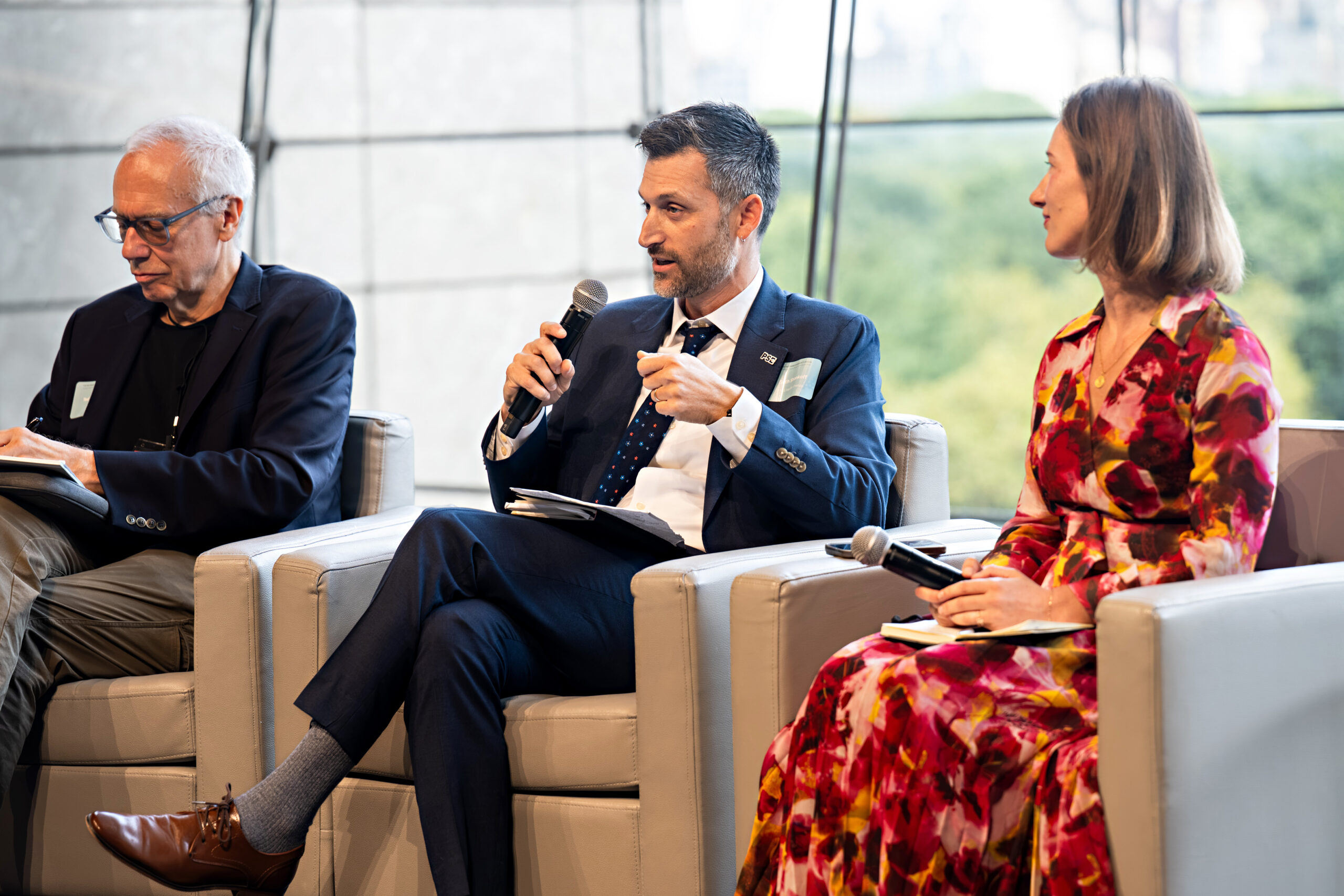
Caption: The Methane Hub hosted “The Methane Emergency Break” at Jazz at Lincoln Center during Climate Week NYC on September 24, 2026.